Anniversary Edits from Old Wedding Footage
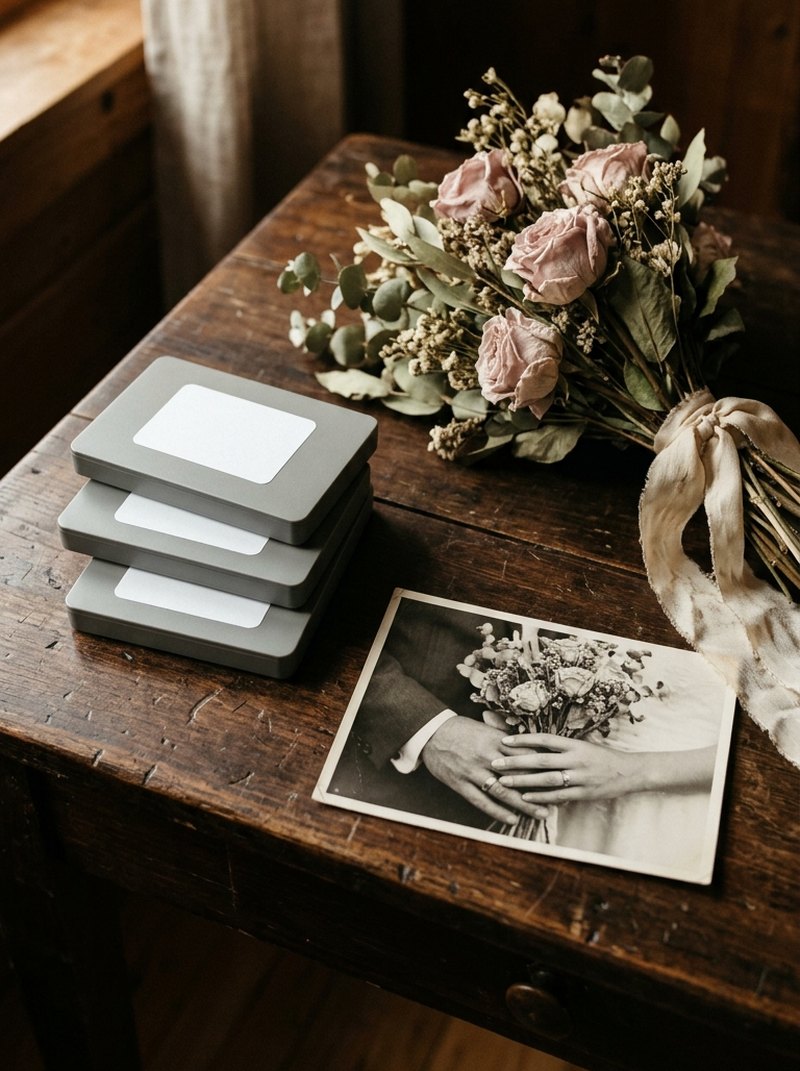
An anniversary edit is a new film cut from a wedding you filmed years ago, usually for a milestone anniversary or a vow renewal. What you can make depends almost entirely on what you kept. The edit itself is ordinary editing with three extra checks: the music license, the old project files and what the couple wants now.
Search for this and you find freelancers offering anniversary videos on marketplaces and template apps for photo montages. Very little is written for the filmmaker who still has the footage and wants to offer something with it.
What can you make from what you kept?
It depends on which archive tier you chose when the film was signed off:
- Deliverables only. You can recut the finished films, but only from what made the first edit. A documentary edit gives you far more to work with than a highlight.
- Selects and the project file. The usual middle tier, and enough for almost any anniversary edit: the moments that nearly made the cut, and the timeline that shows why they did not.
- Everything. Every angle and every take, which matters if the couple wants a moment nobody marked at the time.
Check before you offer anything. Promising a couple a new film and then finding the drive holds only the highlight is a worse conversation than not offering at all.
What should the new film be?
Not the same highlight again. The couple already has it and has watched it. The useful options are what the first edit left out:
- A longer cut of the vows or the speeches, for couples who only received a highlight.
- A film built around the people, such as a toast from a grandparent or a parent dance, which can mean far more years later than it did at delivery.
- The moments from the selects that were cut for time.
- A short opener for a vow renewal, played before the new ceremony.
Ask the couple what they keep going back to. The answer is usually a person or a line rather than a shot, and it gives the new film its center. If they want the whole day rather than a short film, the rules in how to edit a wedding documentary apply.
Does the original music license still cover it?
Not necessarily. A new edit is a new film, and music licenses differ on whether they cover one project or one channel, and on what happens after a subscription lapses. Check the license you filed with the original project. If the new film uses a different track, license it the way you would for a new wedding. The details are in wedding video music licensing.
If the couple asks for the song they danced to, the same rule applies as at the wedding: a commercial recording needs its own license, or the couple takes that decision on themselves.
Will the old project still open?
Sometimes. A project from several software versions ago may need its media relinked, and it can call for plugins, fonts or effects you no longer have installed. Open it before you quote, not after. If it will not open cleanly, the selects and the delivered films still work as plain media.
The footage may also be a lower resolution or a different frame rate from what you shoot now. That is fine on its own. It only matters if you mix it with something new.
Should you regrade it?
Usually not much. The original grade is part of how the couple remembers the film, and a current look on old footage can make it feel like a different day. Fix what was wrong, such as a scene that never matched, and leave the style alone unless the couple asks.
What if you are adding new footage?
A vow renewal, or a short film of the couple now, puts footage from years apart side by side, often from different cameras. Let the difference show rather than forcing the two to match. A clear change in look tells the viewer that time has passed. Where old and new have to sit in one scene, the work is the same as matching multiple cameras.
Families sometimes add their own home video too. If it is 4:3, the choice between cropping and pillarboxing is the one in editing camcorder footage in a wedding film.
Who should suggest it?
You, before the couple has to ask. A note on the anniversary from the filmmaker who made the film lands far better than a request that arrives after the couple has tried and failed to find their files. It only works if your retention policy is written down, so you know what you can offer without searching a shelf of drives.
An anniversary edit has no shoot day. The edit is the whole job, which makes it one of the simplest pieces of work to hand to a wedding video editing service while you keep the relationship with the couple.
What should you tell your editor?
- What is in the archive: delivered films, selects, the project file or full raw, and the software and version the original was cut in.
- The original film, as a reference for the look and as the thing not to repeat.
- What the couple asked for, in their own words, and any person or moment they named.
- The music, already licensed, with the license on file.
- Any new footage, and the camera it was shot on.
- Where it will be shown: at a party, at a vow renewal or on a private link.
The bottom line
An anniversary edit is only as good as the archive behind it. Check what you kept before you offer, build the new film around what the first one left out, and check the music license again rather than assuming.
Keep the original look, let new footage look new, and suggest it before the couple has to ask.